A homeowner’s field guide
Roof Revival
Understand your asphalt shingle roof: why it ages, what maintenance can help, and when repair or replacement deserves a closer look.
Understand the problem before choosing a solution
Asphalt shingles are made with oils that keep them flexible. After years of sun, heat and storms, those oils slowly bake out. Shingles get dry, brittle and start losing granules. Fading alone does not tell you whether a roof needs replacing. Suitable, intact shingles may benefit from maintenance, while leaks, storm damage and advanced wear require a different assessment.
Know the materials.
Granules, asphalt and fiberglass each have a different job.
Look at condition.
Age is only one clue. Damage and wear matter too.
Understand the limits.
Maintenance does not rebuild missing shingles or fix leaks.
Know what’s overhead
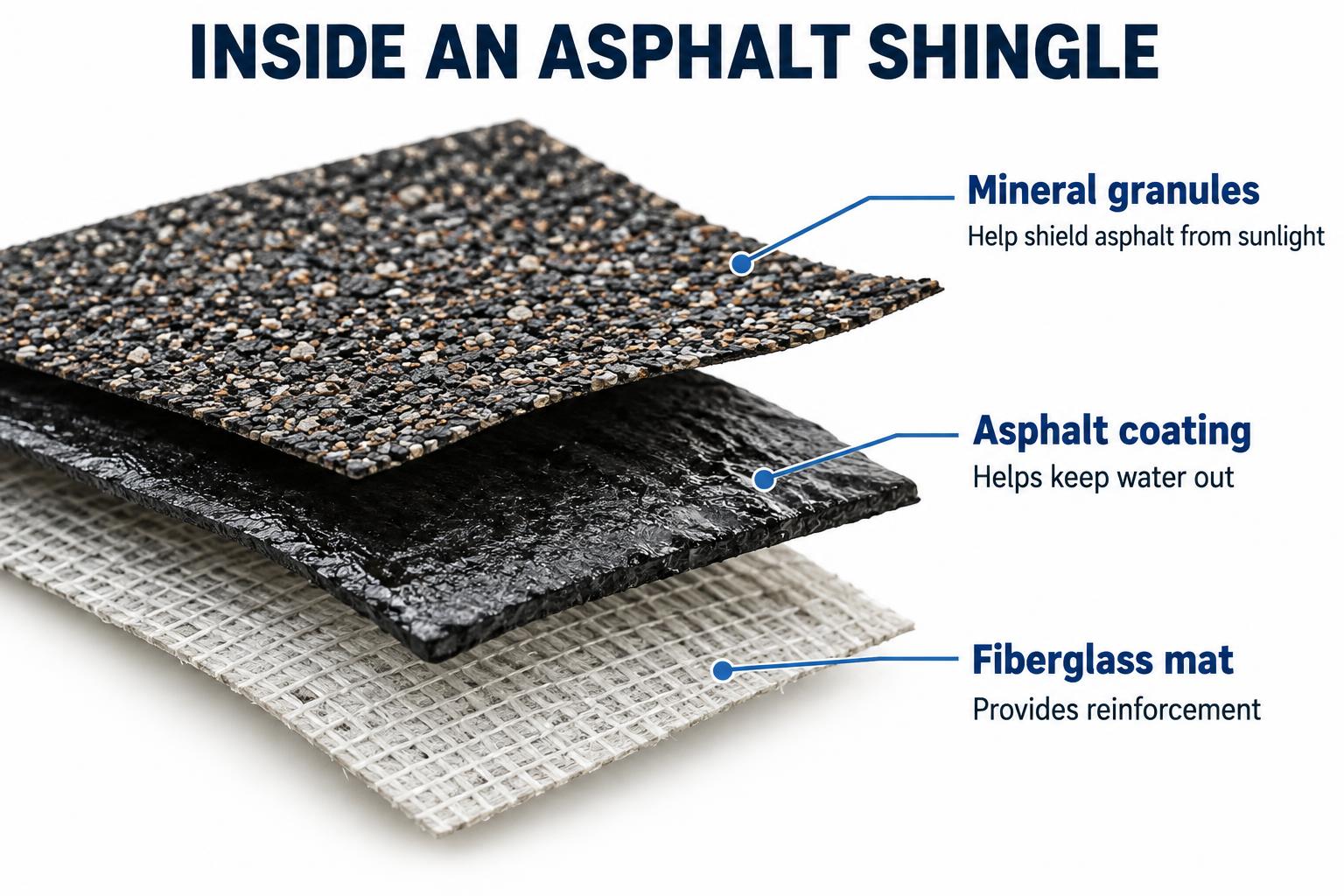
A shingle is more than its surface
Those little stones are granules. They help shield the asphalt underneath from sunlight. The asphalt helps keep water out, while a fiberglass mat gives the shingle strength.
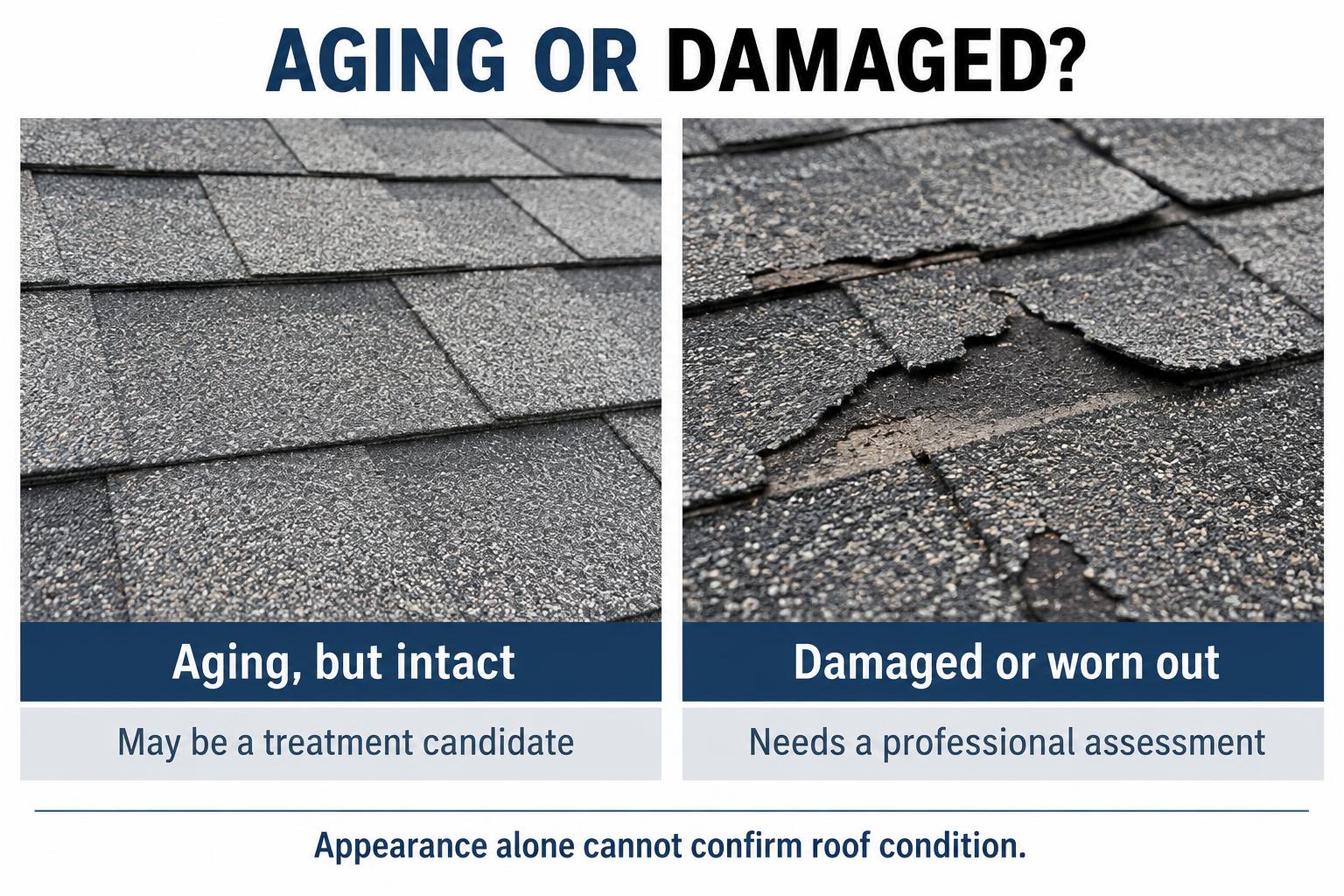
As asphalt ages, it can become less flexible. But dry shingles and damaged shingles are not the same problem. Treatment may help suitable, intact shingles; cracks, leaks and missing material call for a different assessment.
How it works in 3 steps
- 1
Inspect
A professional assesses shingles, age, condition and any repair needs.
- 2
Clean
Shingle-safe cleaning removes surface growth and grime.
- 3
Revive
A penetrating treatment can help suitable asphalt shingles maintain flexibility.
Is a roof revival right for your roof?
Often a good fit
- Asphalt shingle roof
- Roof roughly 8 to 18 years old (some younger or older roofs qualify too)
- Shingles still mostly intact with granules in place
- No active leaks
- Architectural or 3-tab shingles that are dry or faded but flat
- Roof gets lots of sun and heat
Probably not a fit
- Active leaks or water stains on ceilings
- Soft or spongy spots in the roof deck
- Widespread cracking or curled up shingles
- Large bald areas where granules are gone
- Hail or wind damage
- Metal, tile or flat roofs
This checklist is educational, not a diagnosis. Roof condition needs an in-person assessment.
Keep learning about your roof
Understand the materials and the signs of wear.
What cleaning and rejuvenation do—and do not do.
Consider maintenance, repairs and replacement.
Weather, costs, warranties and practical limits.